In our Complete Guide to Purchasing Auditorium Chairs, we briefly introduced the types of auditorium chairs and compared their materials, highlighting the importance of choosing chairs that are both practical and comfortable. Schools, enterprises, government institutions, and cultural or performance events are usually held in formal venues such as large auditoriums or conference rooms. The layout and decoration of these spaces—especially the comfort of the auditorium seating—are crucial to the audience’s or participants’ experience. Seating comfort not only affects their mood and engagement but also directly impacts the overall success of the event. In this article, we will take a closer look at the types and materials of auditorium chairs, aiming to provide you with a practical reference.
1. Categorized by Material
The leg material of an auditorium chair is a core factor in determining its performance and price. The most common materials on the market for Auditorium Seatomg Legs Are Iron, Aluminum Alloy, And Wood . The material of the leg frame is a core factor in determining the chair’s performance and price, as it directly relates to its weight capacity and durability.

1.1 Iron Legs
This is the most conventional and universal material on the market, and it also has the longest history of production. It is made from ordinary steel through cutting, welding, grinding, and spraying. It is the first choice for customers seeking economy and practicality.
- High Strength: Strong overall load-bearing capacity, suitable for long-term and high-frequency use.
- Low Price: The cost is lower than aluminum alloy, offering high cost-effectiveness.
- Disadvantages: Heavy weight, making it inconvenient to transport and install; if anti-rust treatment is not done well, it can rust over time.
- Application: School auditoriums, general conference halls, and venues that prioritize durability and budget control.
1.2 Aluminum Alloy Legs
Aluminum alloy legs are made from aluminum alloy material, which is lightweight and does not corrode easily in humid environments. They do not deform or crack in high-temperature environments and have a long service life, meeting various customer needs.
- Lightweight: The light weight makes transportation and installation easier.
- Anti-corrosion and Rust-proof: Naturally rust-proof, suitable for humid environments.
- High Aesthetic Appeal: The surface of aluminum can be anodized and electrophoresed, giving it a better texture and a more 고급 look.
- Disadvantages: High cost; hardness and impact resistance are slightly weaker than iron legs.
- Application: High-end theaters, concert halls, and government conference halls, for projects that emphasize class and appearance.
1.3 Wooden Legs
Wooden legs place more emphasis on aesthetics and creating a certain atmosphere, suitable for high-end cultural venues, but their impact resistance and environmental adaptability are not as good as metal legs.
- Texture and Class: Natural wood grain combined with paint offers a warm and high-end visual effect, giving a sense of intimacy. Often used in theaters, concert halls, and chapels.
- Comfortable Atmosphere: Wood brings a sense of warmth and makes the overall atmosphere softer, making it more suitable for cultural and artistic venues than cold metal.
- Strength and Stability: Made from multi-layer pressed boards, the strength is sufficient for use, but long-term impact resistance is weaker compared to metal.
- Weight: The weight is between iron and aluminum, making it reasonably convenient to move.
- Disadvantages: Higher price; sensitive to environmental humidity. If the craftsmanship or maintenance is not done well (e.g., human impact or heavy object impact), cracking or deformation may occur.
2. Categorized by Price
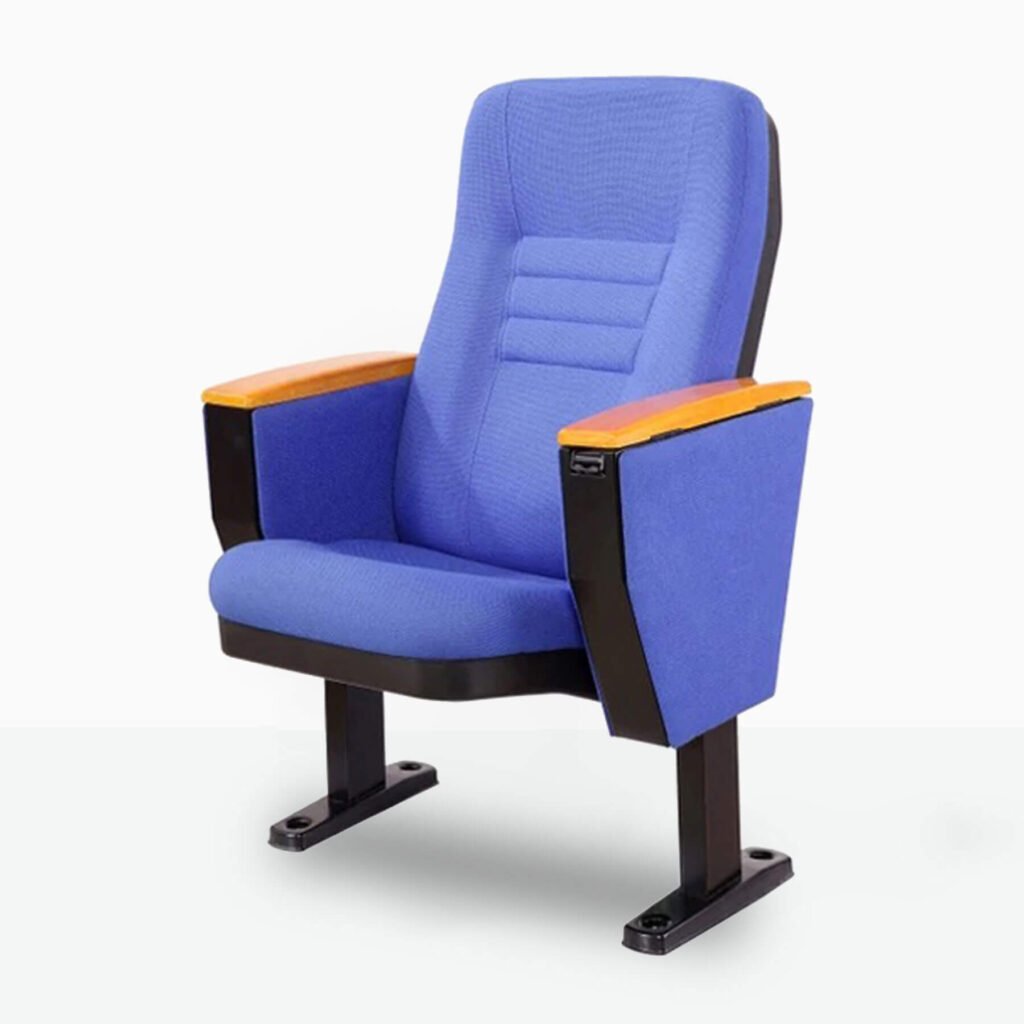
2.1 Economical Model (Iron Legs, Plastic Shell)
The biggest advantage of this type of auditorium chair is its low price, making it suitable for large-scale procurement. The iron legs are sturdy, the structure is simple, and the plastic shell is lightweight, making the overall chair not too heavy and easy to move. Although the appearance is ordinary and not very high-class, it meets basic usage needs. The disadvantages are that the iron legs are prone to rust, and the plastic shell may fade or become brittle after prolonged use or exposure to high temperatures, making it unsuitable for venues with high image requirements. It is typically used in school auditoriums or community centers with a limited budget and medium-level daily use frequency.

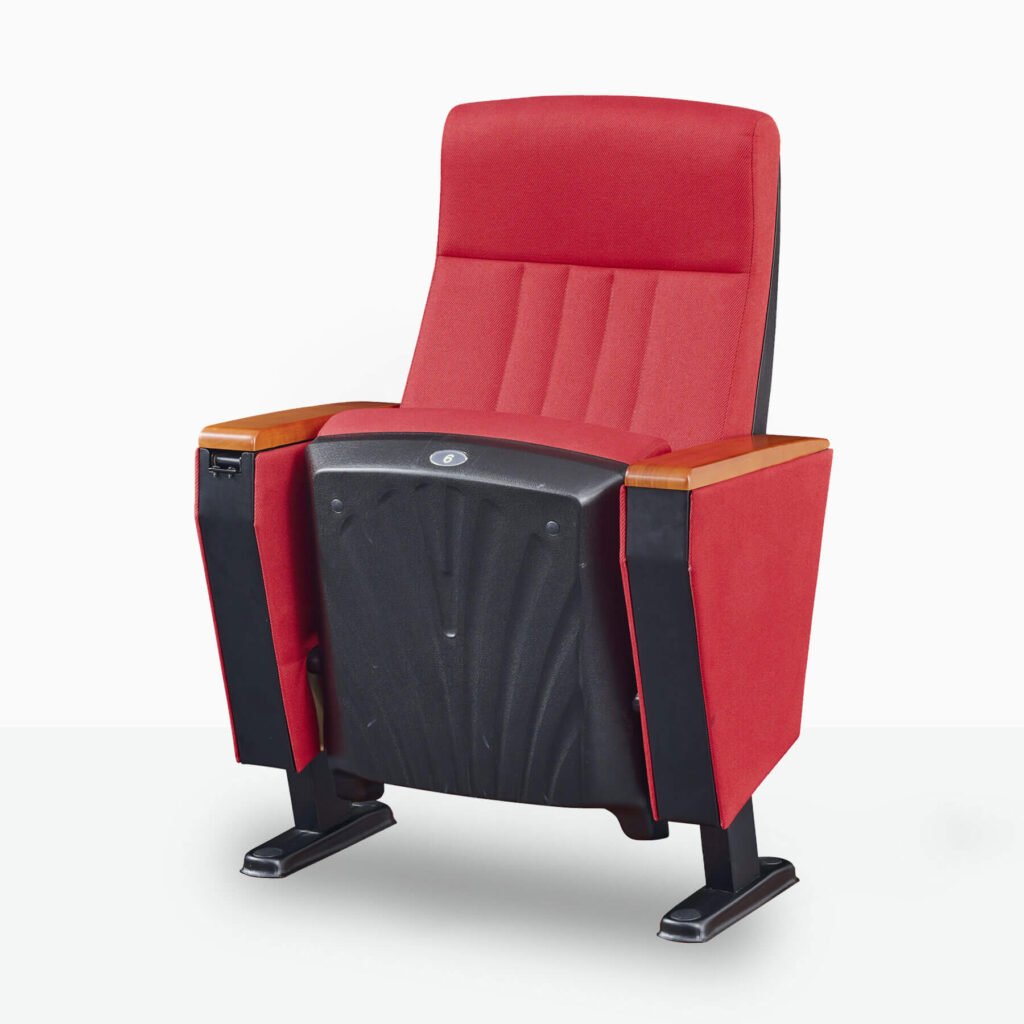
2.2 Durable and Cost-effective Model (Iron Legs, Painted Board Shell)
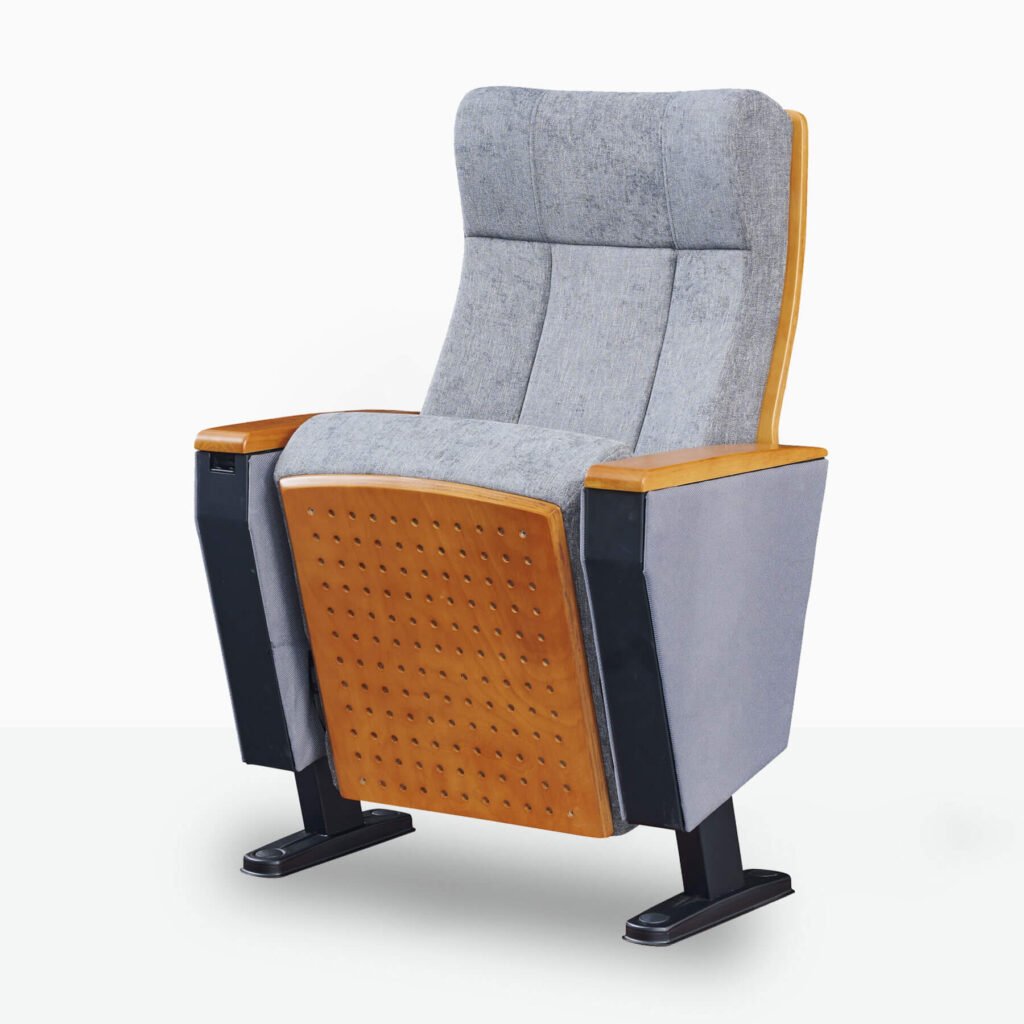
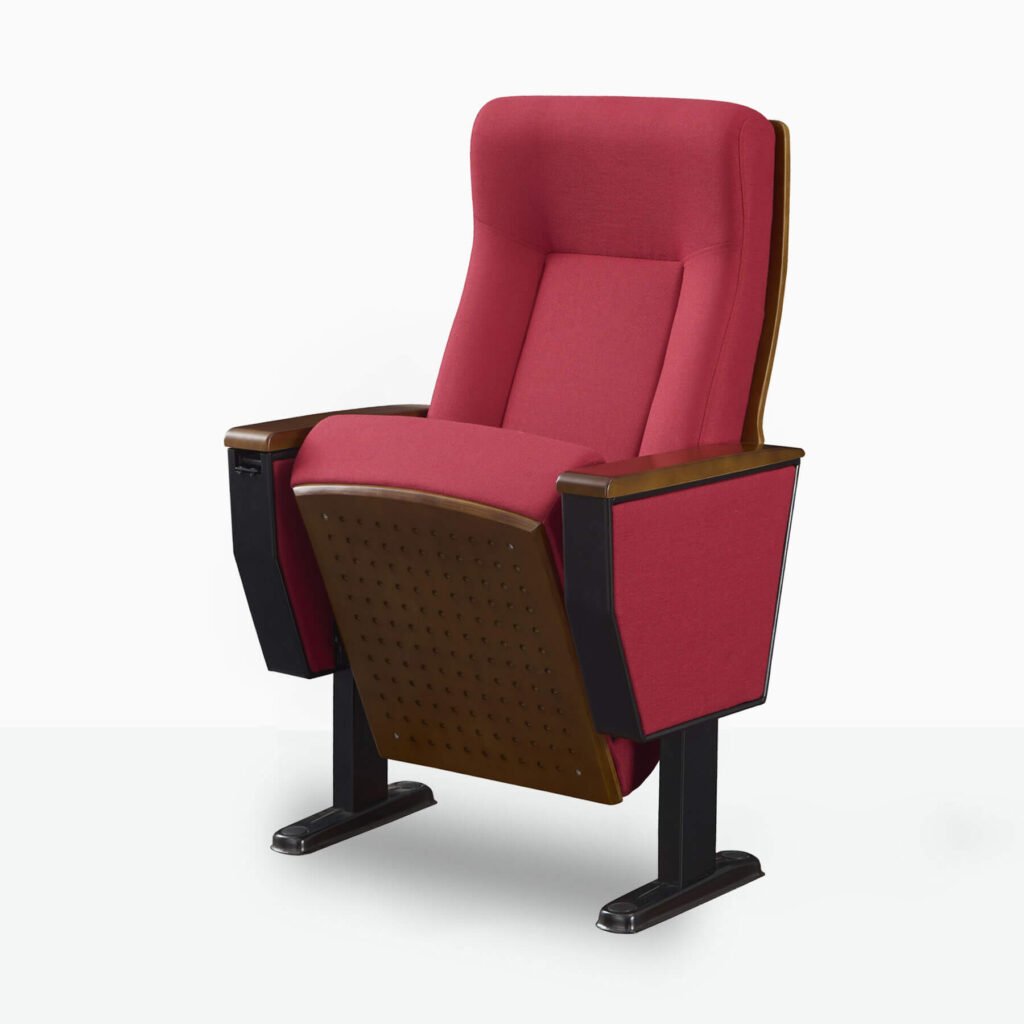
This type of auditorium chair is characterized by being both sturdy and respectable. The iron leg structure is stable and has strong load-bearing capacity. When combined with a painted board shell, the overall visual effect is more upscale than the ordinary plastic model. Its advantage is its moderate price, which balances budget and service life, making it a very cost-effective long-term investment. Although the iron material can rust and requires regular protection, it still provides stable and practical performance in daily use. It is very suitable for school auditoriums and multi-functional conference halls that are budget-conscious but also want their chairs to look neat and aesthetically pleasing.
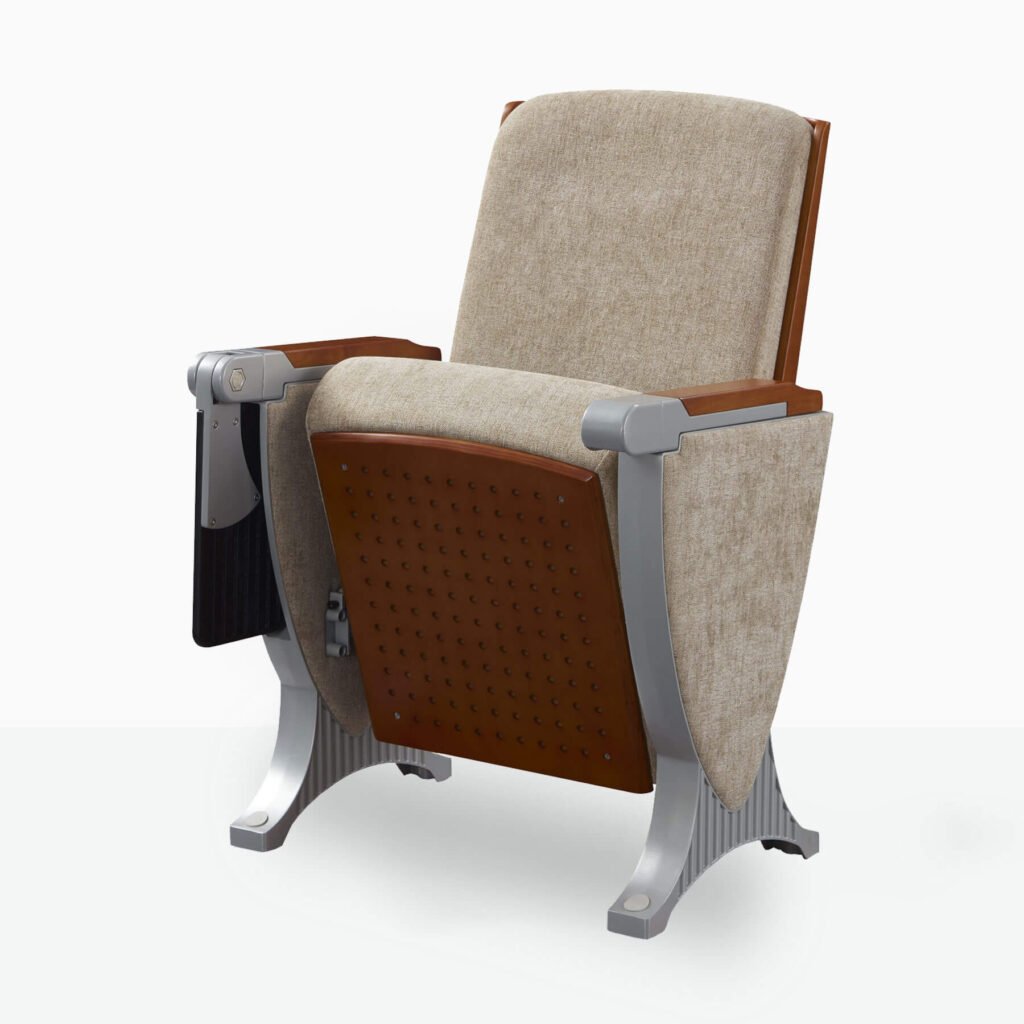
2.3 High-end and Personalized Model (Aluminum Alloy, Painted Board Shell)
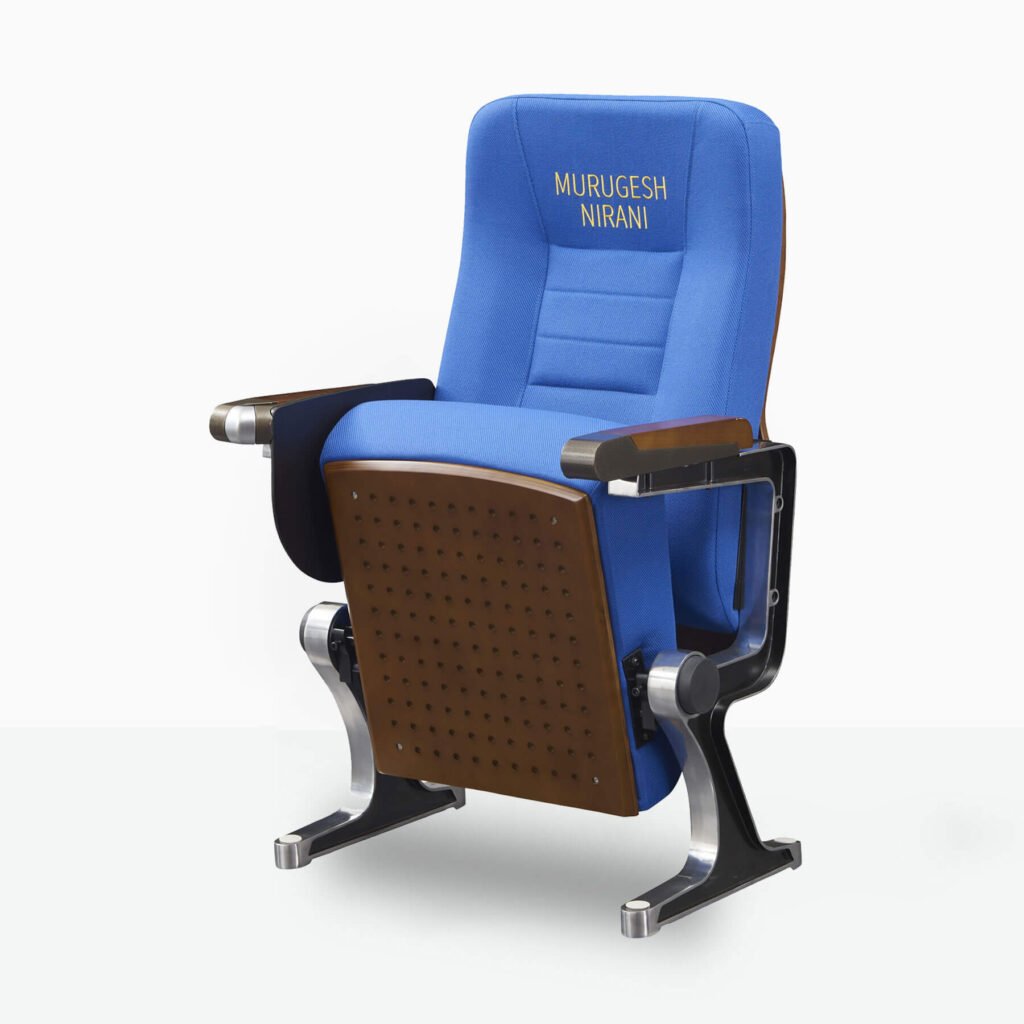
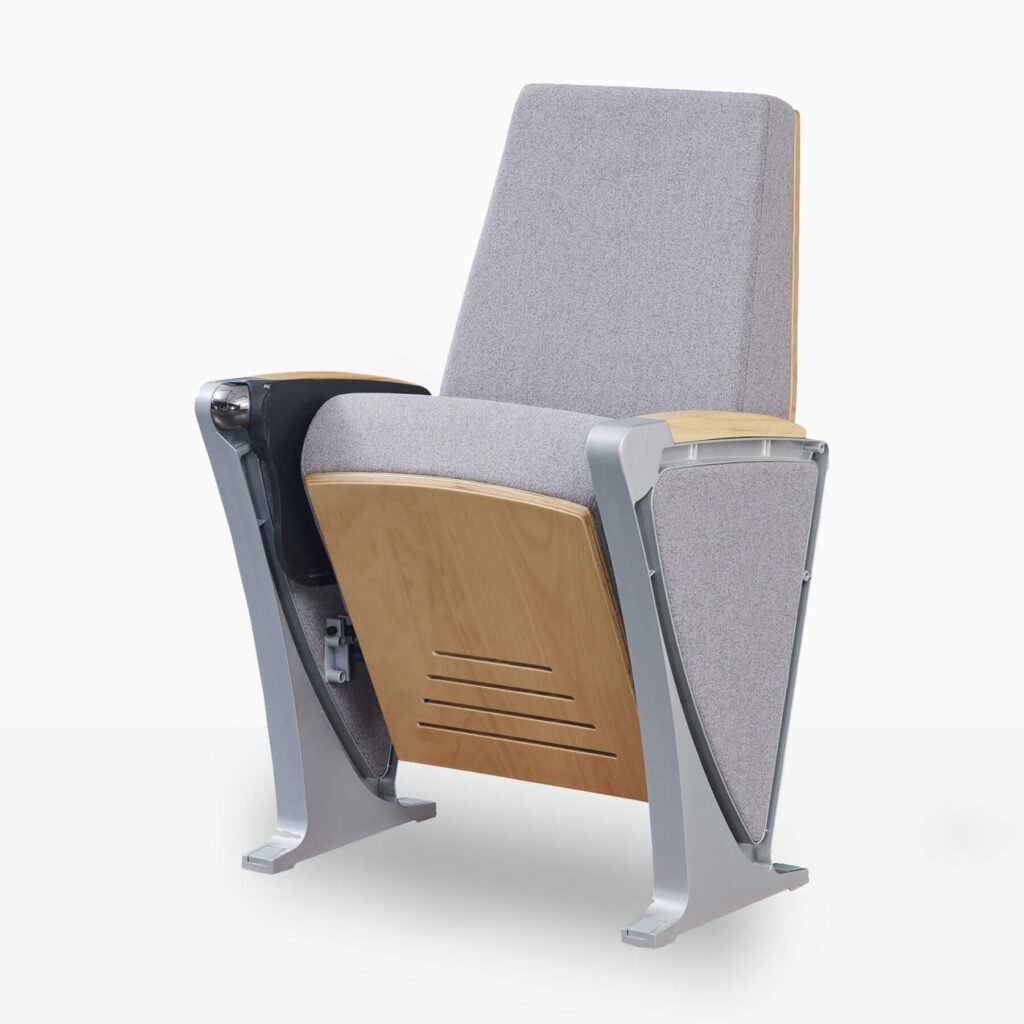
In contrast, the high-end and personalized model emphasizes design and overall image. The aluminum alloy legs are not only lightweight and rust-proof but can also be shaped into more delicate forms. When combined with a painted board shell, the chair gains a modern and high-end feel. It often incorporates patented structures or unique designs, which not only look grand but also demonstrate class in comfort and detail. The price is naturally higher than ordinary models, but the visual effect and improvement in the venue’s image are also more significant. This is very suitable for theaters, art centers, or large conference venues that need to project a certain style.
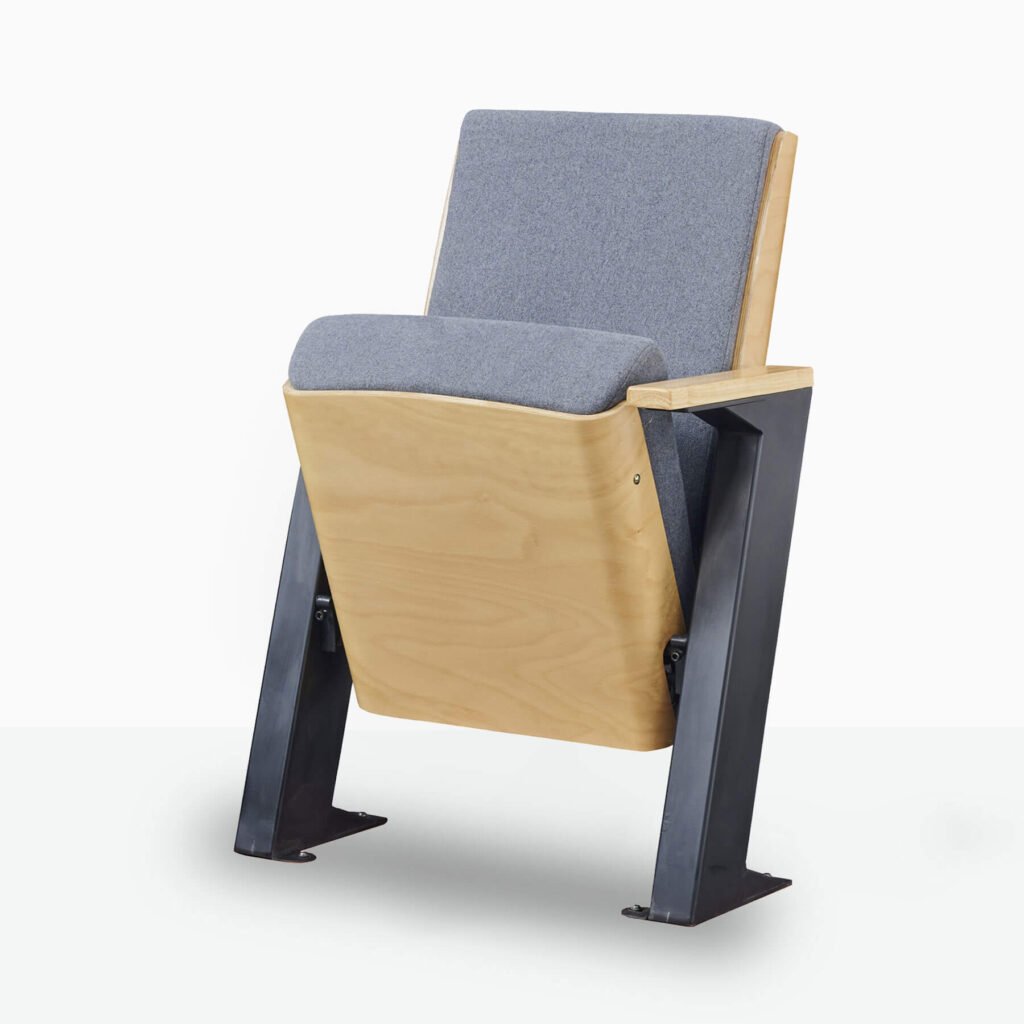
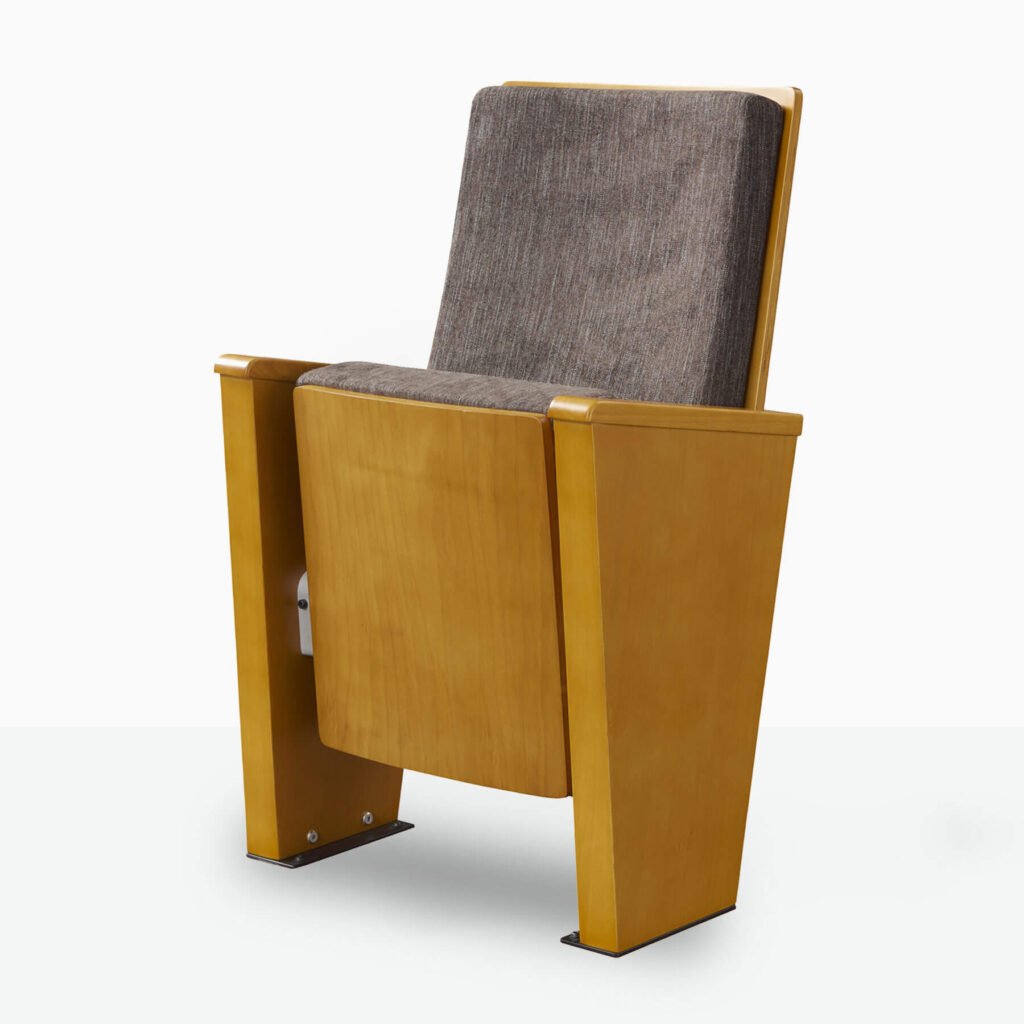
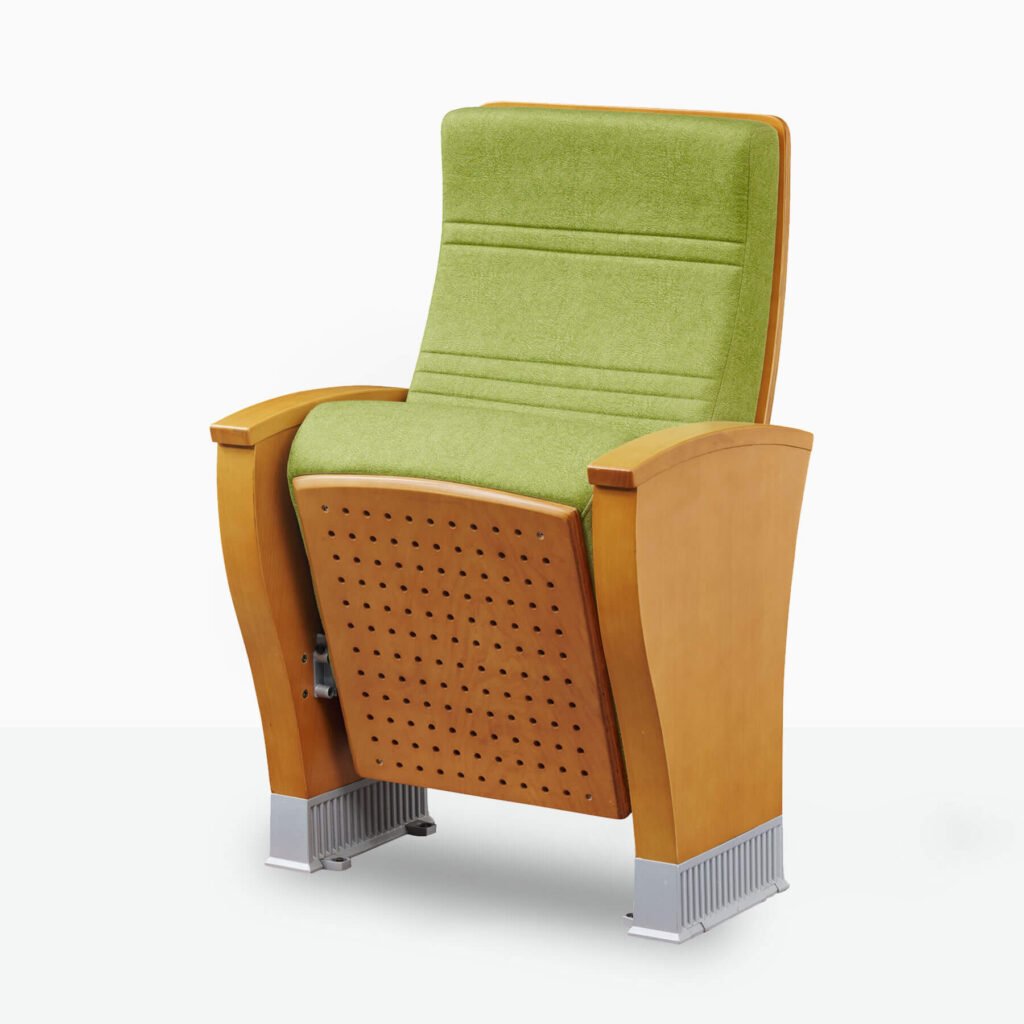
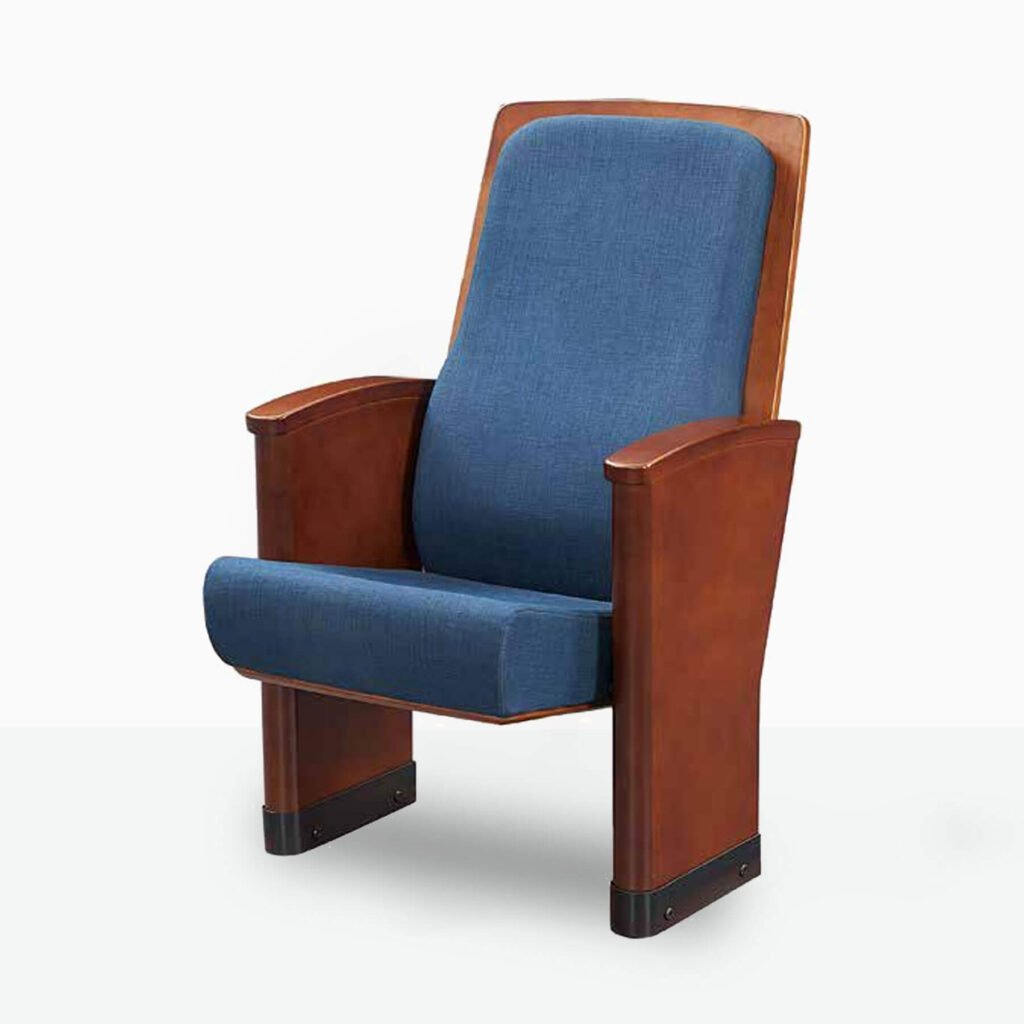
2.4 Preferred Wooden Leg Model (Wooden Legs, Painted Board Shell)
Wooden leg auditorium chairs have a warm, natural texture and a more friendly appearance. They coordinate particularly well with wooden floors or traditional style decorations. When paired with a painted board shell, the overall texture is outstanding, giving a sense of elegance and comfort. The disadvantage is that wood is quite sensitive to humidity and temperature, requiring a good indoor environment and regular maintenance. It must not be exposed to water, sunlight, or hard object/human impact, as it may crack. This type of chair is more suitable for venues with a classic style or those that emphasize atmosphere, such as high-end school auditoriums, cultural centers, or conference spaces with a strong design sense.
Section Summary
In other words, we offer PP Plastic And Plywood With Painted Finish Shells for auditorium seating seat and backrests. The chair legs are available in iron, aluminum alloy, or wood. All of these are cost factors that affect the chair’s price.
3. Categorized by Leg Type
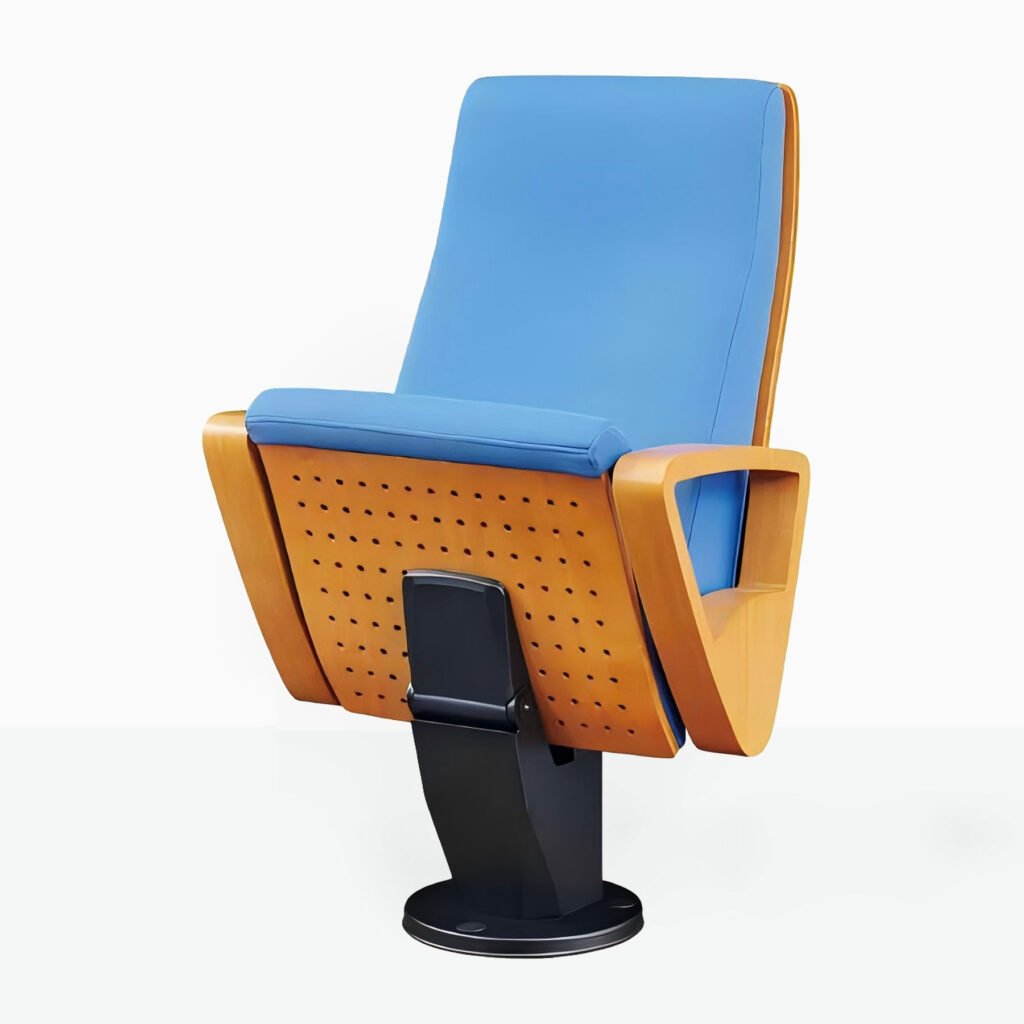
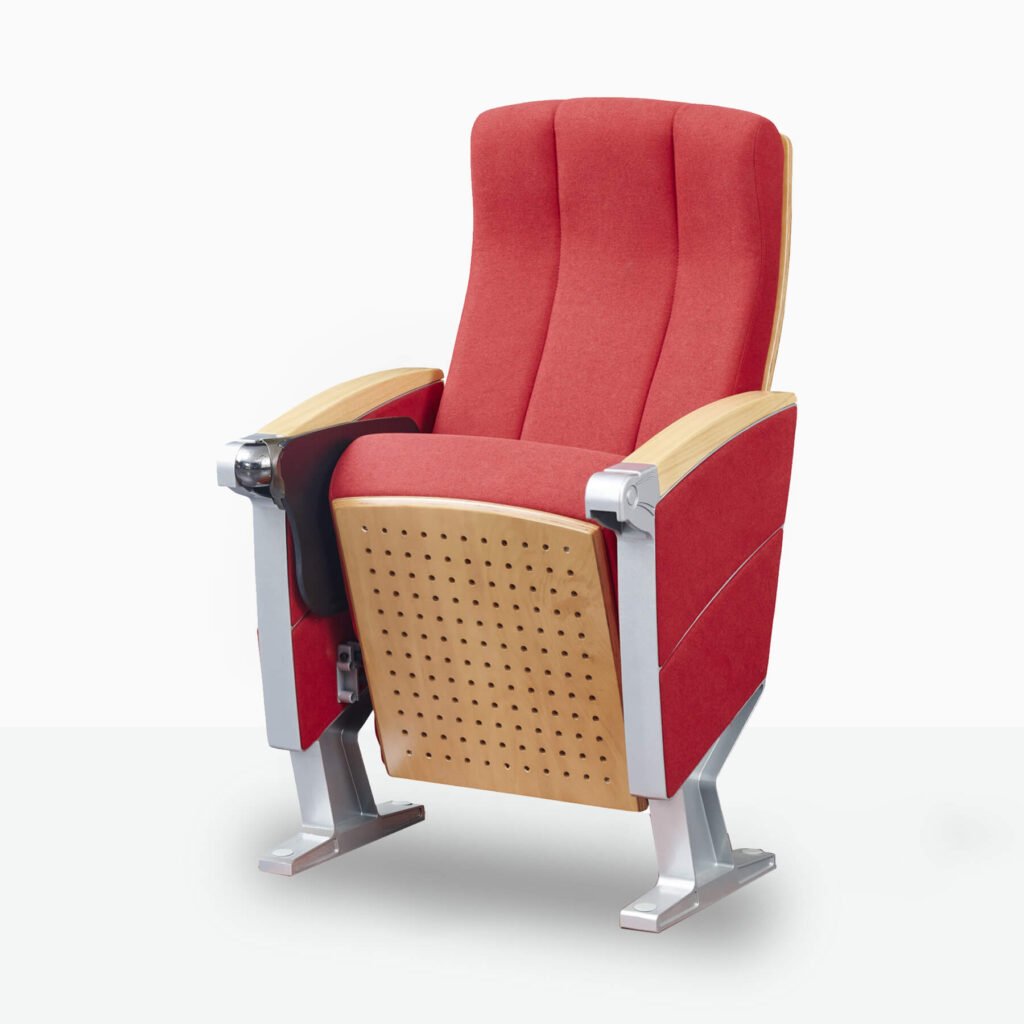
The leg types of auditorium chairs are mainly divided into Single-Leg And Double-Leg .
3.1 Single-Leg Model
The single-leg auditorium chair features a single-leg design. The entire chair’s center of gravity is supported by one stand, giving it a more concise and modern shape. The leg tubing often has ventilation holes for connecting with other facilities (such as power outlets, ventilation ports). However, due to the complexity and high requirements of the manufacturing process, its price is relatively high, and special attention must be paid to the venue conditions during installation.
3.2 Double-Leg Model
The double-stand leg auditorium chair mainly has the armrest welded to the leg. It is known for its simple and generous design, which is both elegant and practical. The price of this type of stand leg usually depends on the material chosen, with steel being more economical and aluminum alloy being a bit more expensive than steel.
4. With or Without a Writing Tablet
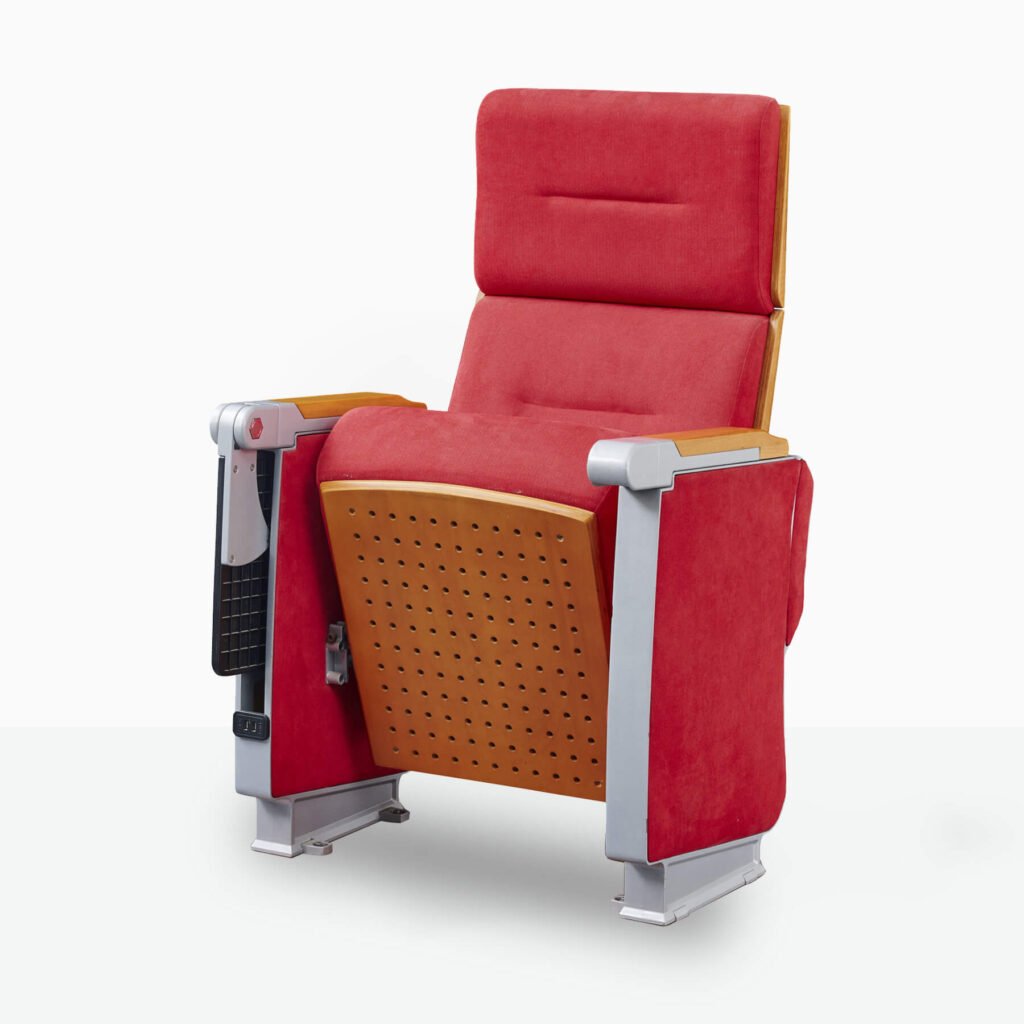
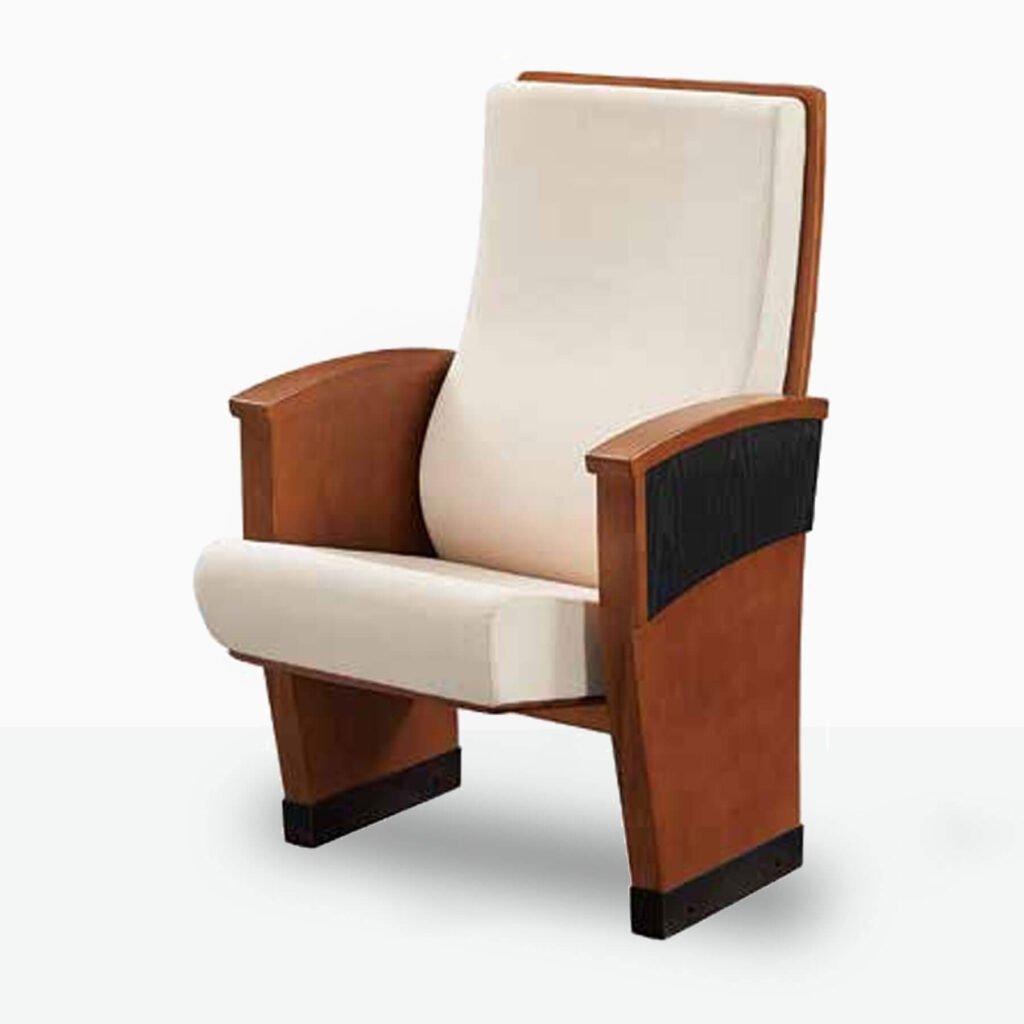
Customers can choose the Auditorium Seating With Or Without A Writing Tablet based on their needs. From past experience, most customers who require a writing tablet choose a front-mounted one, considering that the frequency of use is low and they do not want to increase costs with a rear-mounted one. Of course, you can make your choice based on your specific venue needs. Below, we will briefly introduce the differences between auditorium chairs with and without writing tablets.
With Writing Tablet
This type of seating is common in schools, training centers, and conference halls. The writing tablet can be installed on the inside of the right armrest. It can be easily flipped out for use when needed and hidden away when not in use to maintain the chair’s neat appearance. You can also choose a rear-mounted writing tablet, which is fixed to the back of the chair for the row behind to use. This design saves space and is convenient for taking notes. Such a design makes the auditorium chair both comfortable and practical, making it very suitable for scenarios that require note-taking and document handling.
Without Writing Tablet
For venues focused on the viewing experience, such as theaters, performance halls, or religious auditoriums, it is more suitable to choose auditorium chairs without writing tablets. The simple design makes the overall space look more spacious and unified while reducing maintenance and cleaning workload. Without the distraction of a writing tablet, the audience can focus more on the stage and performance, enjoying an immersive experience.
5. Fixed Legs and Movable Legs
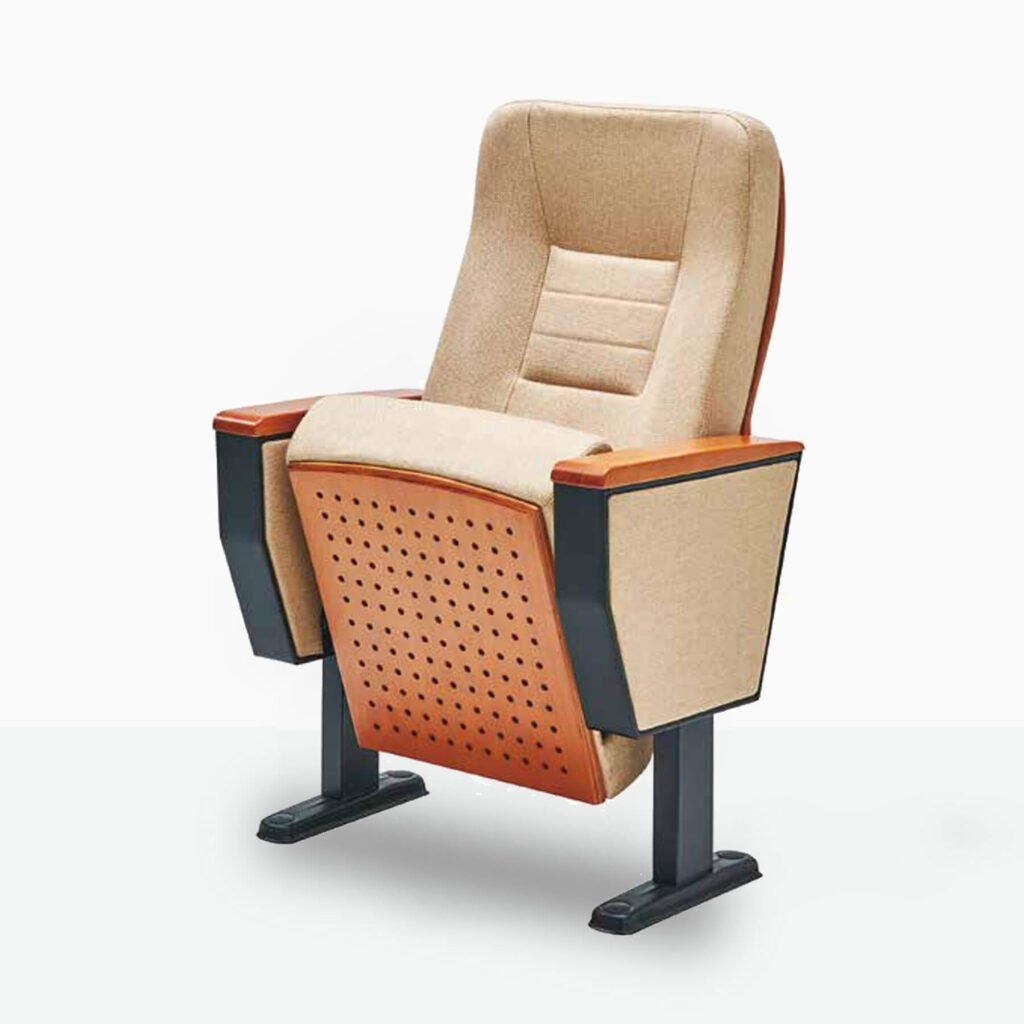
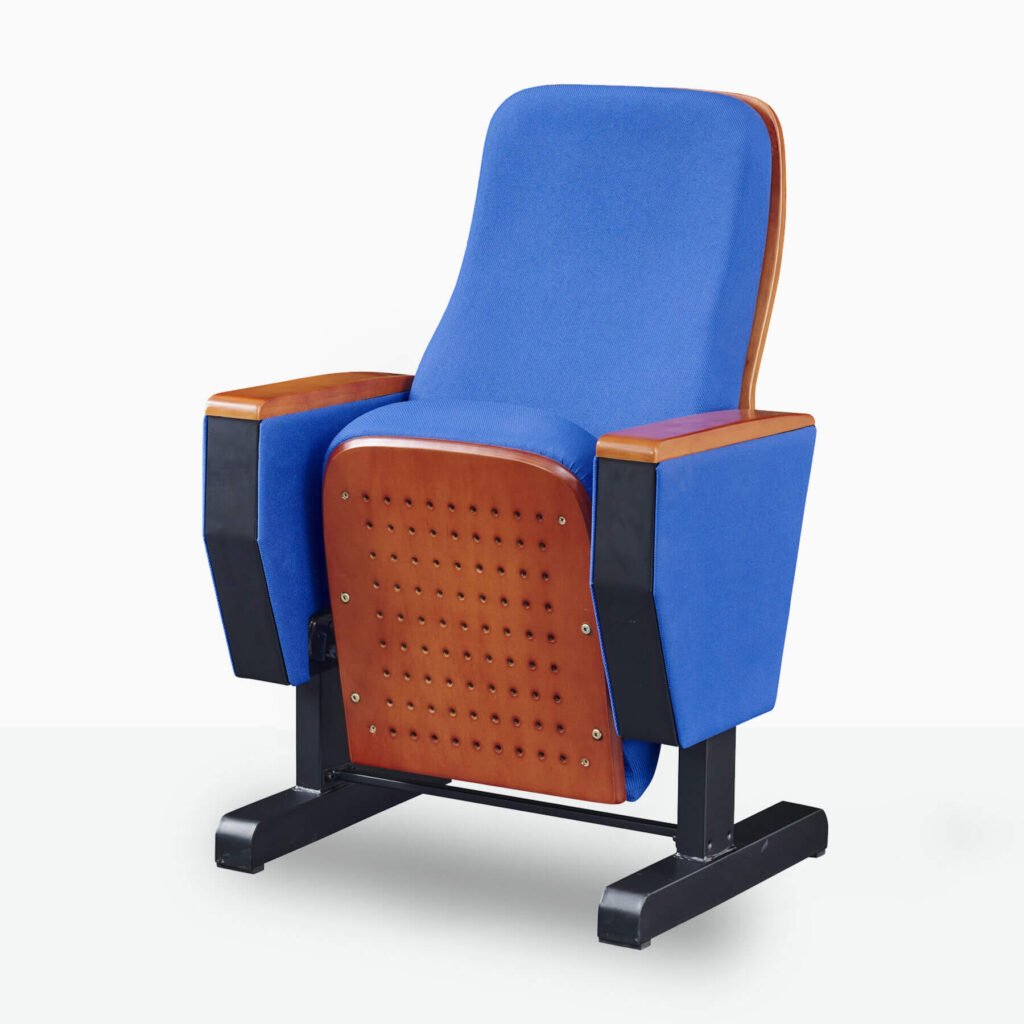
.Our auditorium chairs are divided into two types: Fixed Legs And Movable Legs . They have no difference in functional use, only a slight difference in assembly.
5.1 Fixed Legs
Fixed-leg auditorium chairs are directly fixed to the ground with expansion bolts. The overall stability is strong, they do not move around, and safety is high. They can maintain a neat and orderly arrangement, making them suitable for long-term use in theaters, school auditoriums, or large conference halls, ensuring a uniform and professional venue image.
5.2 Movable Legs
Movable-leg auditorium chairs are not fixed to the ground. They are flexible to move and can be rearranged as needed. They are more suitable for multi-functional spaces, such as temporary meetings, training classrooms, or occasions that require frequent layout changes. They are flexible and convenient, but their overall stability is not as good as fixed legs.
6. Upholstery Fabric or Leather
You may need a guide to Choosing Auditorium Chair Upholstery Materials to help you decide which type of upholstery to select. Our auditorium chair cushions are made of molded foam that will never lose its shape. On top of the foam, customers can choose to have it upholstered with fabric or leather. The choice of material is one of The Factors That Affect The Product’s Price .
6.1 Fabric Upholstery
Fabric upholstery is the most conventional practice. It is rich in color and can be freely matched to the venue’s style. The fabric material is breathable and comfortable and can also be treated for fire resistance upon request. However, it is not suitable for long-term sun exposure, as it can fade, and its overall lifespan is more affected by the environment.
6.2 Leather Upholstery
- PU Leather Upholstery : PU leather’s price is similar to fabric upholstery. It looks more like leather, has a flat texture, and is easy to clean. It is suitable for customers with a limited budget who still want a leather-like effect. However, the durability of PU is generally average, and the surface may crack over time.
- Microfiber Leather Upholstery : Microfiber leather is slightly more expensive than PU, but its abrasion resistance, breathability, and feel are closer to genuine leather, and its service life is longer. It is an ideal choice for customers who like the texture of leather but want to control their budget. It is often used in venues with certain requirements for a high-end appearance.
- Genuine Cowhide Leather Upholstery : Genuine leather upholstery is high-end and elegant, but it can generally only be used in areas that come into contact with the human body (such as the seat and backrest). Non-contact areas need to be paired with imitation leather of the same color. The reason is that when cowhide is bonded with glue in non-contact areas, it can easily detach after long-term use. It is suitable for high-end theaters or conference halls that emphasize image and comfort, but the cost is relatively the highest.
7. Additional Configurations
Customers can choose Additional Configurations according to their needs to enhance the functionality of the chair.
- Number Plates : Number plates are usually installed on the chair back or armrest, making it convenient for the audience to quickly find their seats. This is particularly suitable for theaters, lecture halls, and conference centers that require precise seating arrangements. It not only enhances the user experience but also makes venue management more orderly.
- Cup Holders : Cup holders are often installed on the armrests or rear of the backrest, providing the audience with a convenient place to put their drinks. They are common in conference halls, cinemas, or multi-functional halls used for long periods, making users more comfortable, but they require attention to cleaning and maintenance later on.
- Book Nets : A small book net can be added to the back of the chair to hold documents, programs, or small items. It is compact and does not affect the overall appearance, making it particularly suitable for training rooms, school auditoriums, or academic conference halls, where it is convenient for the audience to carry and use materials.