How to Plan Home Theater Seating Layout
1. Introduction: Why Proper Seating Layout Defines Your Home Theater Experience
Our previous article How to Choose and Arrange Theatre Seating briefly mentioned that the planning and layout of home theater chairs are generally much more flexible than those in commercial cinemas. Now you might be getting ready to design your own home theater. You’ve probably invested a lot in the equipment—projector, sound system, screen—but when it comes to seating, you may just follow your designer’s color and style suggestions.
However, based on feedback from many of our past clients, the comfort of the seats is actually the core of the entire private cinema experience because it’s the part you directly feel.
Besides material and quality, the home theater seating layout also plays a big role — it affects viewing angles and comfort. If your neck hurts after a short movie, the layout probably isn’t right.
2. Space Layout Principles
Functional zoning: Make sure the screen area, viewing area, and walkway are clearly defined.
Distance between screen and seating: This depends on your room size. If space allows, keeping a distance of 3 meters or more from the screen to the seats works best. The main seating should align with the screen center to ensure the best viewing angle.
Aisle width: We recommend at least 0.9 meters for the main aisle. If possible, 1.1–1.3 meters is ideal. A wider walkway gives more comfort and ease of movement between rows.


3. Riser and Tiered Design
This is the key part of this article. Many clients forget to plan seating tiers early and end up just placing expensive chairs randomly. This not only wastes the room’s potential but can also cause serious visibility issues—like the back row being blocked by the front.
So, if your space allows, we highly recommend pre-designing a riser structure:
- Depth: ≥ 1.8 meters — this ensures enough walkway space after placing the seats.
- Height: 18–30 cm — this height difference gives the back row a clear view and adds a layered look.
For small spaces: Use a staggered layout instead of risers — for example, 2–3 seats in the front and 3–4 in the back, with the back row slightly offset to avoid blocking.
4. Seat Dimensions and Row Spacing
- Depth: ≥ 1.8 meters — this ensures enough walkway space after placing the seats.
- Height: 18–30 cm — this height difference gives the back row a clear view and adds a layered look.
For small spaces: Use a staggered layout instead of risers — for example, 2–3 seats in the front and 3–4 in the back, with the back row slightly offset to avoid blocking.
| Seat Type | Armrest Center Distance | Recommended Row Spacing | Notes |
|---|---|---|---|
| Airline-style seats | ≥ 0.57 m | ≥ 1.1 m | Suitable for compact layouts |
| Sofa-style seats | ≥ 0.68 m | ≥ 1.5 m | Suitable for larger theaters |
Every homeowner values ultimate comfort in their home theater. If your experience feels worse than a public cinema, all that investment goes to waste. So, maximizing space is always a good choice.
However, small home theaters can’t always afford generous spacing like luxury ones. Even so, remember: too little row spacing will reduce legroom and walking comfort. You can consider ordering theater sofas with narrow arms to increase the row spacing.
If you use electric recliners, you’ll need to add 20–30 cm extra space to the row spacing shown in the table above.
5. Viewing Distance and Height
Minimum viewing distance: The front row should be placed at least 2.5 times the height of the screen.
For example, if your screen is 100 inches tall, the first row should be about 2.5 meters away.
Eye level of the first row: should align with the screen’s center line, with a tolerance of ±15°.
Second row and beyond: Follow the riser and spacing table above, ensuring each row’s eye level is slightly higher than the previous one.
6. Comfort & Function Configuration
Functional choices:
Functional choices:
- You can add independent footrests and multi-angle reclining backs — this allows you to adjust your position anytime during the movie for neck and waist relaxation.
- For multi-seat rows, some models offer storage drawers between seats — perfect for snacks or remotes while you watch.
- Ambient lighting: Usually built into the riser base or under steps, customizable to your room’s decor.
- USB charging ports: All our cinema seats can include USB ports so you won’t miss calls while watching.
Premium options:
All our Cinema Chairs Can Be Customized — leather type, color, and function.
Genuine cowhide leather is the most premium choice and lasts for years without peeling.
If you’re on a tighter budget, microfiber leather or fabric upholstery are great alternatives.
7. Practical Layout Examples
8. Conclusion
In short, designing a private home theater is all about scientific layout, ideal viewing angles, and selecting seats that match your space and needs.
Follow your designer’s advice for aesthetics, but for seat selection and placement, take professional suggestions from a cinema seating manufacturer like us.
It’ll save you time, money, and frustration during your theater setup.
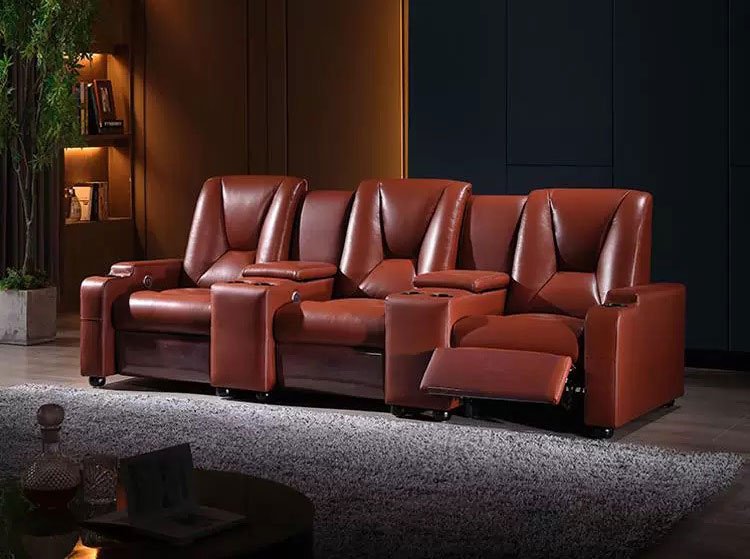
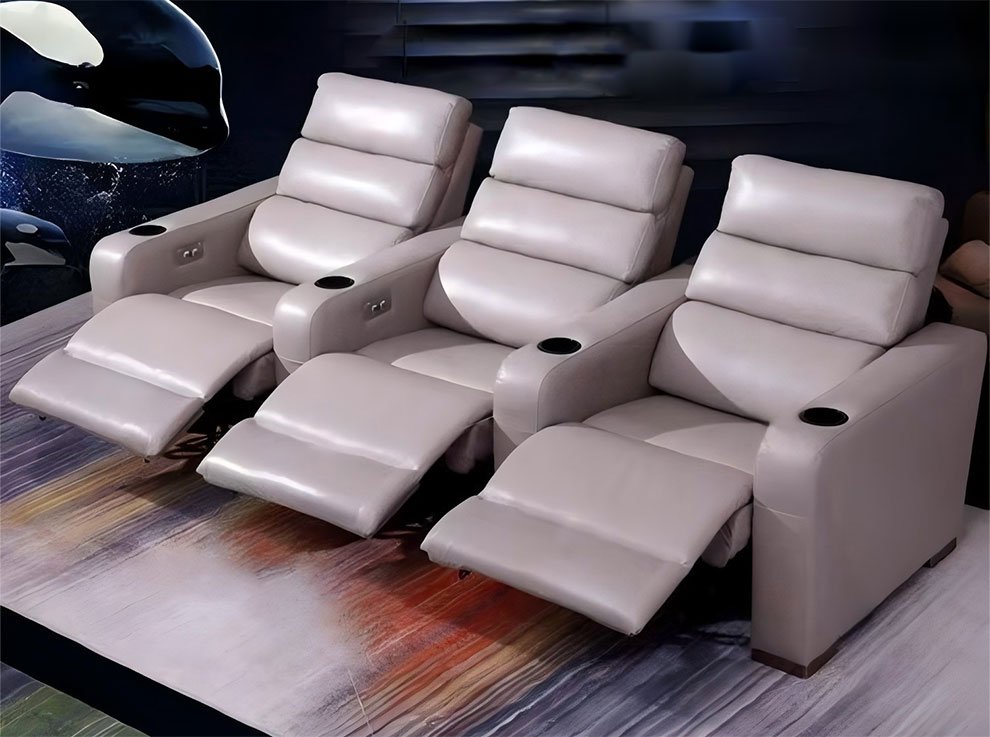
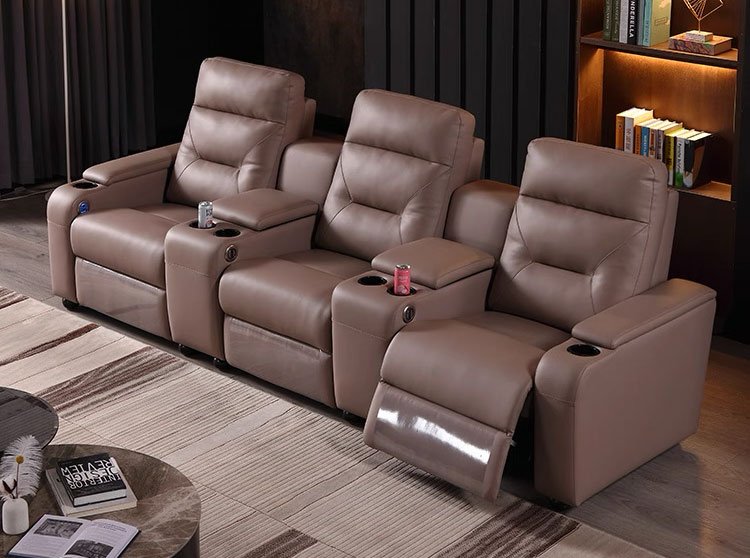
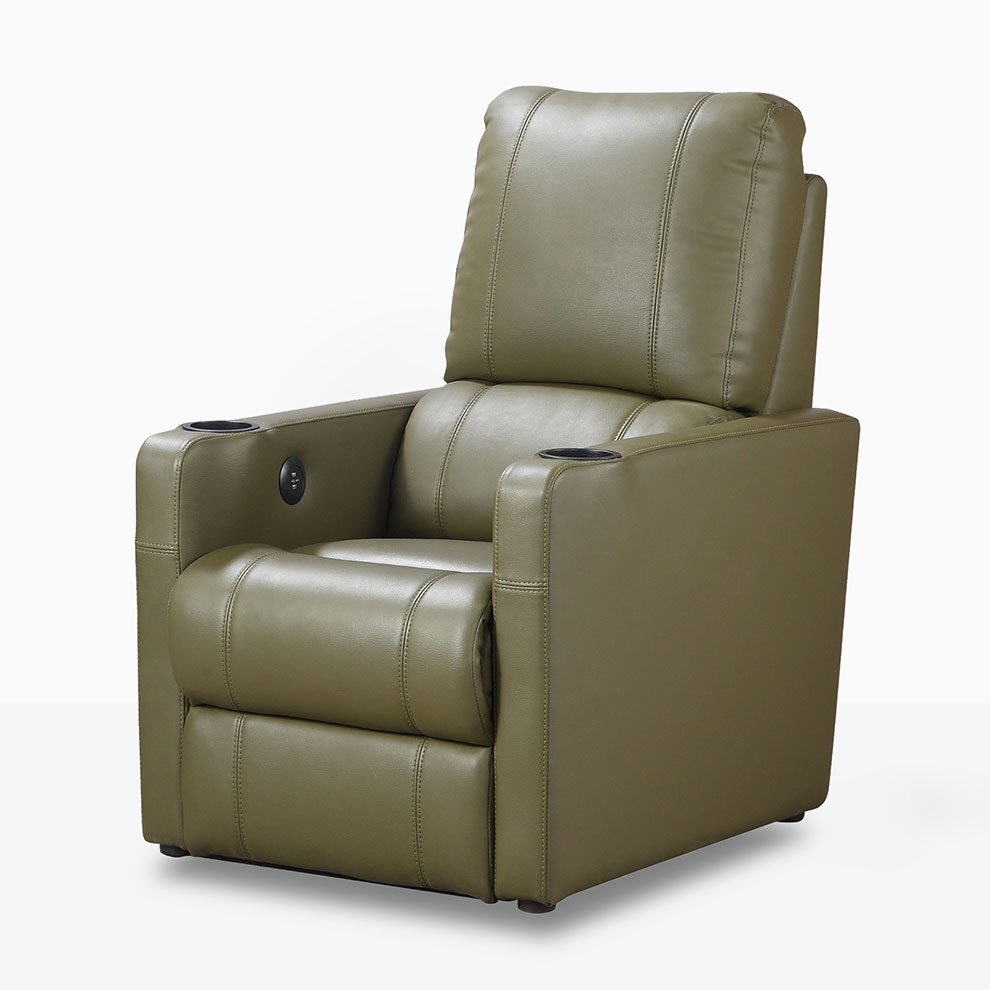
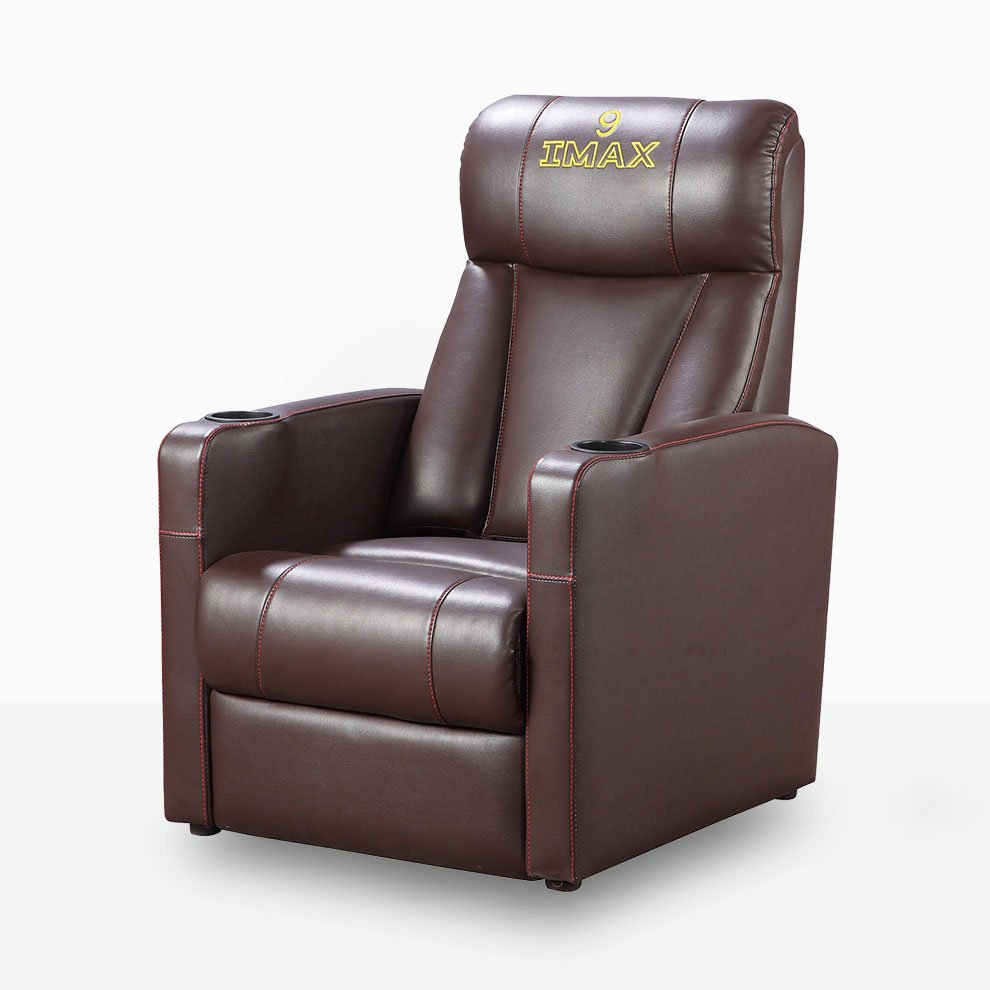
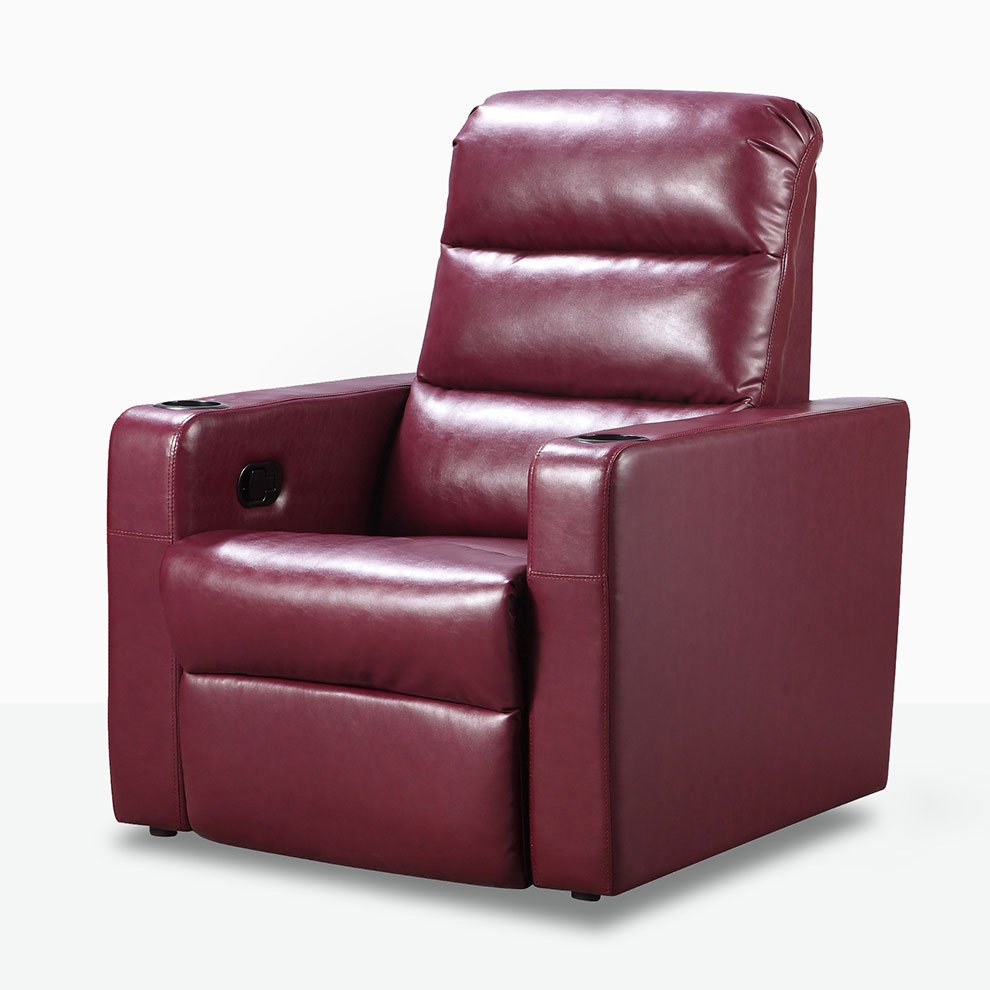
Product recommendation:
🌶️🌶️ This is a real project case our factory participated in, and the showcase ends here. If you are planning to purchase auditorium seating, our guide “ The Ultimate Guide to Selecting Auditorium Seating ” may be helpful for you. If you want to learn more about this specific product, you can click the showcase images in the section below to read in detail.