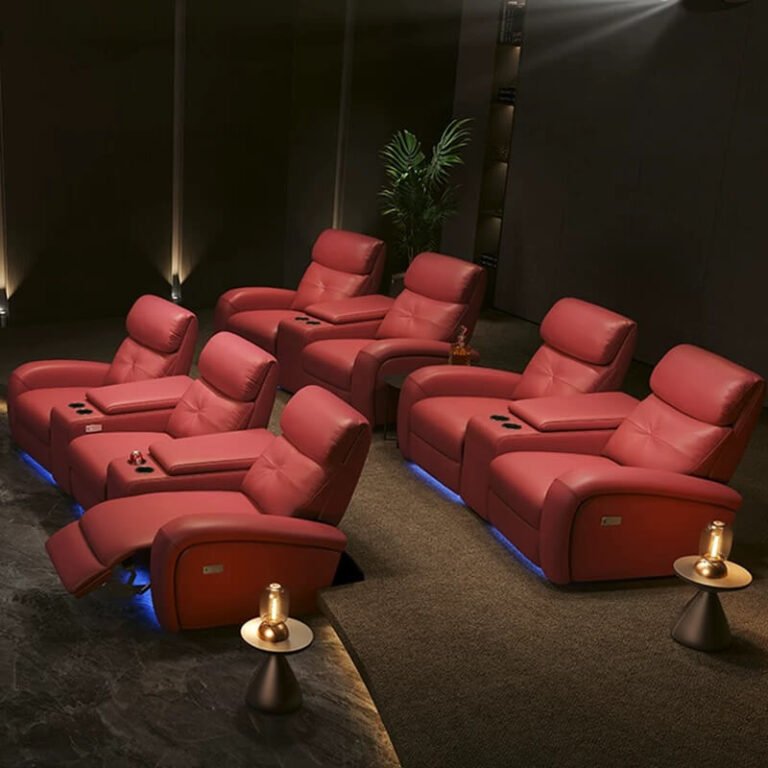
In our Complete Guide To Purchasing Auditorium Seating , we briefly introduced the Differences Between Auditorium Chairs And Cinema Seats. However, this article focuses mainly on the key differences between home theater seats and commercial cinema seats within the category of cinema seating.


Auditorium Seating With Writing Tablet
Theater Seating With Cup Holder
Introduction: Theatre Seats Are More Than Just a Seat
In actual procurement, the buyers of cinema seats are usually the investors or managers of movie theaters. Although they are not the direct users, when selecting products they still need to consider things from the audience’s perspective. Only when the audience enjoys a comfortable viewing experience can the cinema earn a good reputation and attract repeat customers. Faced with the wide variety of cinema chair models on the market, purchasing staff often feel confused: what exactly are the differences between the various types of seats? And what are the core factors that truly affect comfort?
If you are not a commercial cinema purchaser but are instead planning a small home theater, or if you are simply a home theater enthusiast who wants to gain a deeper understanding of related products, then this article is equally suitable for you. In the following sections, we will draw upon industry experience to provide practical advice and professional guidance for those who are planning to purchase or are currently in the process of selecting cinema seats.
The comfort of theatre seating is crucial for a good viewing experience. If you focus on the right points and combine them with smart space planning and a well-designed layout, your buying process will go much smoother.
Theatre seating generally comes in two types: commercial and Home Theatre Seating. Functionally, they aren’t very different, but some customers may want extra features like recline or electric recline, which can make the viewing experience better.
2. Comparison: Home Theatre Seats vs. Commercial Theatre Seats
The Differences Between Home Theater Seating And Commercial Cinema Seating lie in their design concepts, materials, internal padding, and upholstery.
2.1 Design Concept and Function
Home Theatre Seats: These seats focus more on personalization, comfort, and a luxurious experience. In terms of style, they usually look fancier than commercial theatre seating, and the seat width is generally bigger. Function-wise, customers can add features like recline or electric recline. So if your neck gets tired during a movie, you can lean back a bit to rest. If you want, you can also add a USB port to charge your phone, so you won’t miss an important call while watching.
Commercial Theatre Seats: Commercial cinemas care more about cost. They usually pick seats that take up less space, and durable seats help save overall investment. Because the audience in commercial cinemas varies a lot, the seats must meet national standards for weight capacity and safety. Popcorn cup holders are standard, while recline features depend on the needs of each auditorium.
2.2 Material, Cushioning, and Durability
Home Theatre Seats: Besides the different design and style, the Chair’s Materials Are A Core Factor Affecting Its Comfort. High-end home theatre sofas often use zig-zag springs inside, with high-density foam for an extremely soft “cloud-like” feel. For upholstery, leather is an option—top-quality seats can use cowhide or real leather on the touch surface. If the budget is lower, microfiber or eco-leather works well too.
Commercial Theatre Seats: Because commercial seats are used frequently, the preferred foam is one-piece molded foam, with densities ranging from 45KG/m³ to 55KG/m³. Higher density means firmer foam. The advantage is it won’t deform over time, so you don’t have to worry about sagging. Common upholstery includes fabric and PU leather. Some cinemas choose better-quality faux leather or microfiber for easier cleaning.
2.3 Purchasing and Cost Considerations
Home Purchases: When buying for a home, the family members are the direct users, so they care more about the comfort of each seat and the overall experience. Usually, the number of seats needed is not very high. Even if a single home theatre seat costs several times more than a commercial seat, the total spending is still not much compared to other furniture. That’s why comfort and high-end design are the top priorities.
Commercial Purchases: For commercial theatre seating, buyers need to consider the investment versus the return. They try to control costs reasonably without compromising the basic comfort experience. These buyers also need to work with Reliable, Experienced Manufacturers . They want to make sure the products meet quality standards during the warranty period, and if any minor issues arise, the manufacturer can respond quickly with after-sales support.
3. Seating Layout
3.1 Smart Planning to Maximize Space and Experience
Basic Layout Principles: When Arranging Seats In A Home Theatre, you can be more flexible. Home users care about comfort and usually don’t want to cram their small theatre full. They prefer a more open space that instantly makes them feel relaxed and ready to enjoy the movie. Commercial cinemas, on the other hand, pay more attention to using space efficiently and try to plan every inch carefully. Before buying, these customers often ask professional designers—or theatre seating suppliers like Yeplley—to create a seating layout based on seat dimensions. They then order seats according to the layout plan.
Viewing Angles: Seat placement is all about giving everyone the best view. Whether it’s a home theatre or commercial theatre, each seat should have a clear line of sight. During construction, make sure the steps’ height and width are planned correctly so there’s enough aisle space in front of the seats for people to walk comfortably.
Aisle Design: For commercial theatres, the number of emergency exits should be planned before building. Ideally, aisles should lead straight to an exit. If an exit is at the far end, we recommend leaving at least 2000mm between the last row and the exit. This prevents overcrowding during emergencies and reduces the risk of panic-related accidents.
3.2 Seat Spacing and Arrangement
Seat Spacing : To properly Plan The Number Of Seats In A Limited Space, we need to consider the Cinema Seating’s Dimensions and the length of the area it will occupy. When calculating how much floor space theatre seating takes, we start with the center-to-center distance between seats. This is the distance between the center points of the backs of two seats in the same row.

Calculation of Space Occupied:
Center-to-Center Distance × Number of Seats + Single Armrest Width = Total Occupied Length
Example:
For the chair mentioned above, which has a center-to-center distance of 590mm:
- Two seats: 590mm × 2 + 70mm = 1250mm
- Three seats: 590mm × 3 + 70mm = 1840mm
And so on.
Optimal Viewing Distance : When designing seat layouts, comfort is the priority. The tilt angle shouldn’t be too high. Usually, from the center of the first row, the angle from a viewer’s eyes to the bottom of the screen is ≤ 30°, and to the top of the screen is ≤ 35°–40°. This helps avoid neck strain for viewers in the front row. There’s no strict rule for how far the first row should be from the screen, but for a 6-meter-tall screen, the first row should start at least 7.2 meters away.
3.3 Handling Special Layout Challenges
Stepped/Floor-Raised Areas : Stepped floors are common in auditoriums or cinemas. Our auditorium and theatre seating products work well in stepped areas. But during construction, make sure the step height and width are planned properly. For auditoriums where people need to write, we suggest step heights don’t exceed 150mm. Otherwise, the drop between rows can make it hard to use the fold-down writing tablets. In cinemas, writing tablets aren’t needed, but the step drop shouldn’t be too high either, to avoid affecting the viewing experience. Step heights between 150mm and 200mm are generally ideal. The depth of each step should be at least 1000mm.
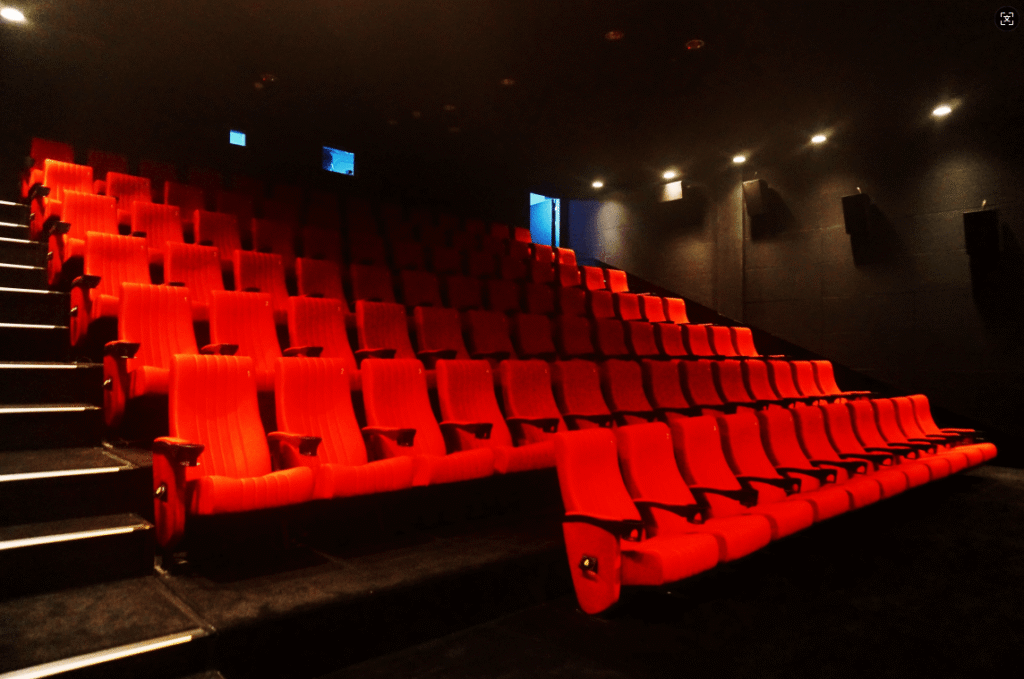
Curved Areas : The advantage of a curved layout is that it allows everyone in the space to better focus on the center of the stage or screen. Similarly, our auditorium and cinema chair products are also suitable for curved layouts. Before placing an order, customers are encouraged to refer to Actual Cases Of Curved Layouts for guidance. Another important point to note is that the connecting accessories for straight-row layouts and curved layouts are different. By default, we provide accessories for straight-row setups. If your venue has a curved layout, please make sure to inform us before ordering, to avoid mismatched accessories that could prevent proper installation and delay your delivery.